Wednesday, 27 December 2023

MORE KAOHSIUNG

12th - 16th Dec 2023

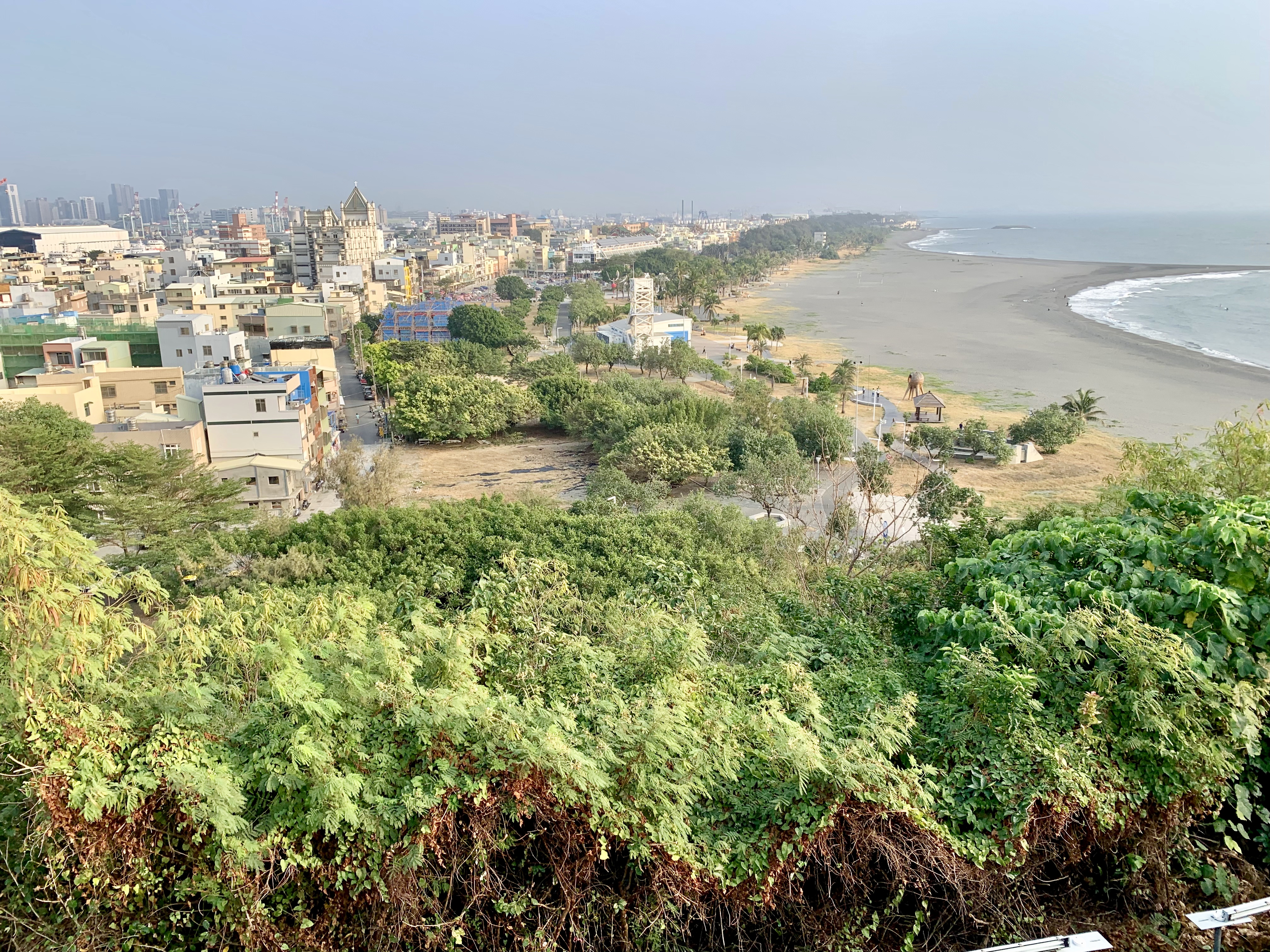
Looking south down the island of Cijin.

Cinjin Island is a long strip 5 miles long and only about half a mile wide. It runs up the western side of Kaosiung port and the northern end, with a large lighthouse, forms the harbour entrance.

Left: Metro to the Gushan ferry wharf.......


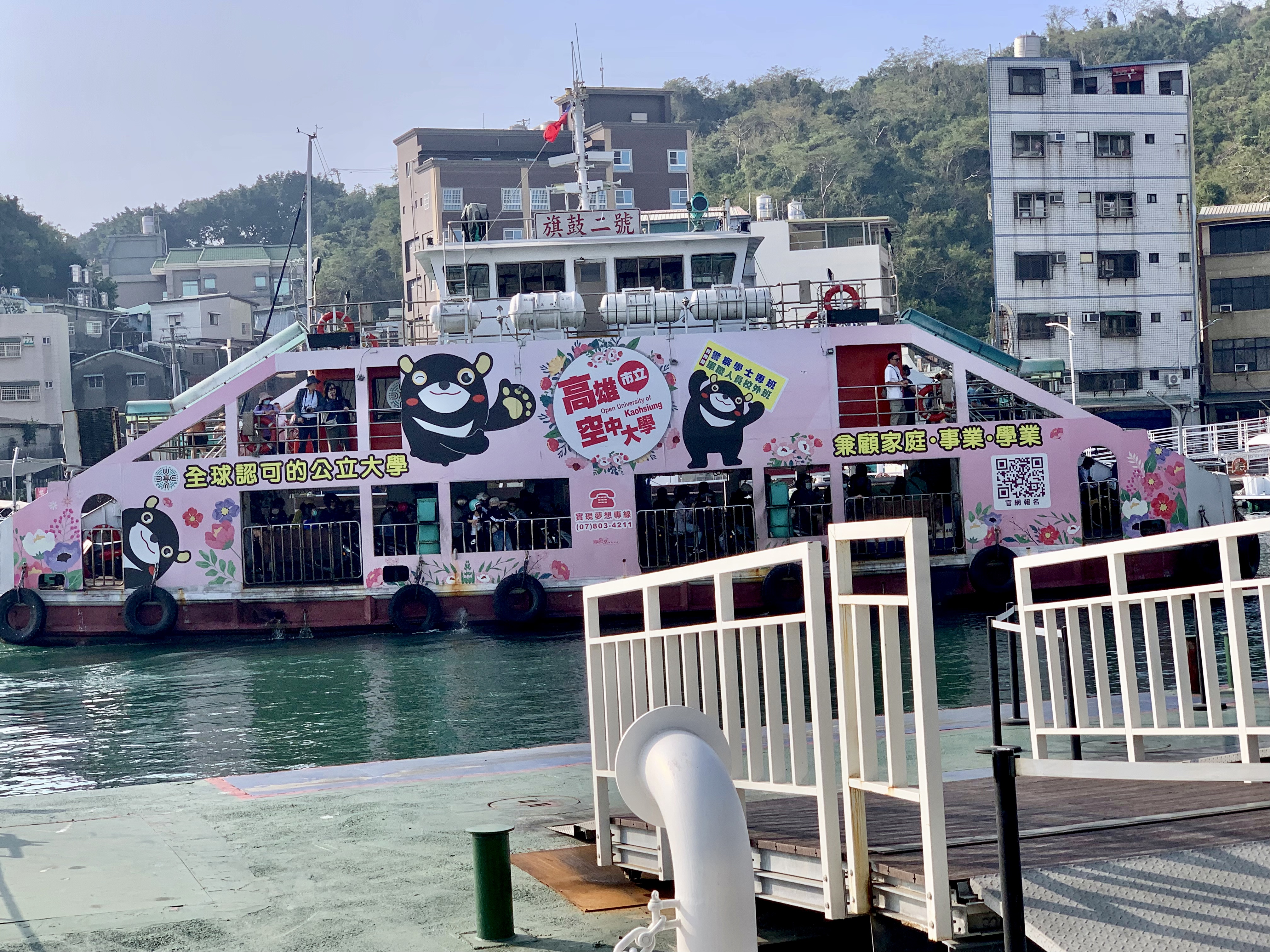
Right:........where these colourful little ferries depart every 15 mins for the 10 minute (500yds) crossing to the north end of the island. Cost: 30p!


Left: Boarding. I was followed by a helpful local chap and his family who were also 'touristing'. He took this photo so I'd better show it. I kept bumping into them during the course of the day. They thought I was following them; I thought it was the other way round!
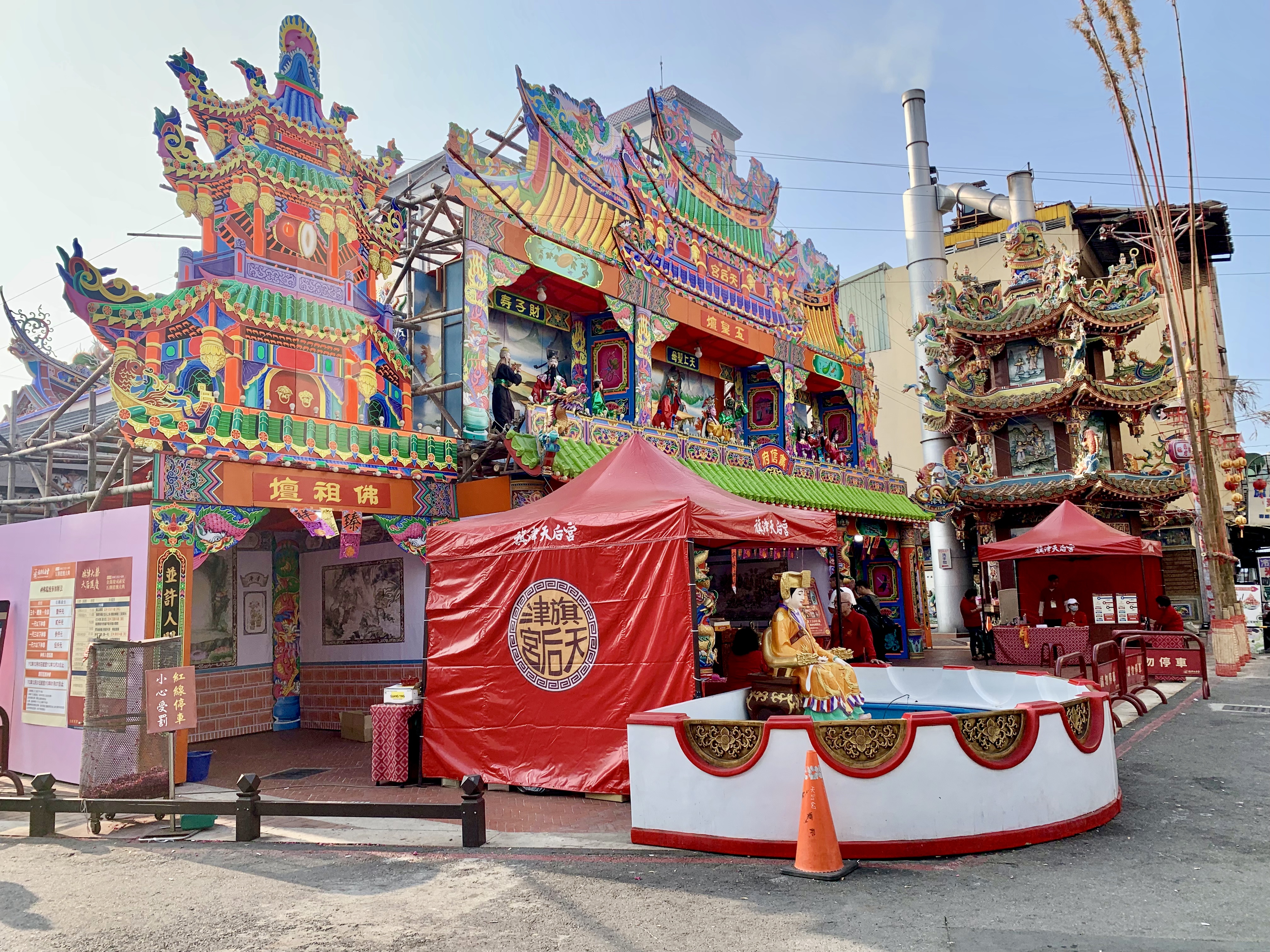


Walking through the busy little town to the beach on the west side of the island, the first notable thing I came across was this elaborate temple (right). The life-size figures of priests (I think) lined the balcony at the front, and they were 'animated' to wave and bow to us. At the entrance was a stall selling, or trying to sell, model 'Buddhas' so you could take one home to pray to it. The fact that they cost between £50 and £200 (equivalent) depending on size, rather discouraged me....and I couldn't imagine lugging a Buddha around for the rest of my journey!

Left: The balcony with waving priests.


Left: The beach. The sand was a dull grey colour and it was fairly deserted. I believe people do swim here and I later saw a man carrying a surfboard, but I didn't see much surf. There is a ridge of high ground running along the northern shore. The rest of the island is flat.


I walked towards the long high ridge and passed this 'statue' (right) on the way. I had read that the sea here has some fairly dangerous rip-tides and currents to sweep away the unwary swimmer. This fellow and his faithful friend would not have been much help I fear.
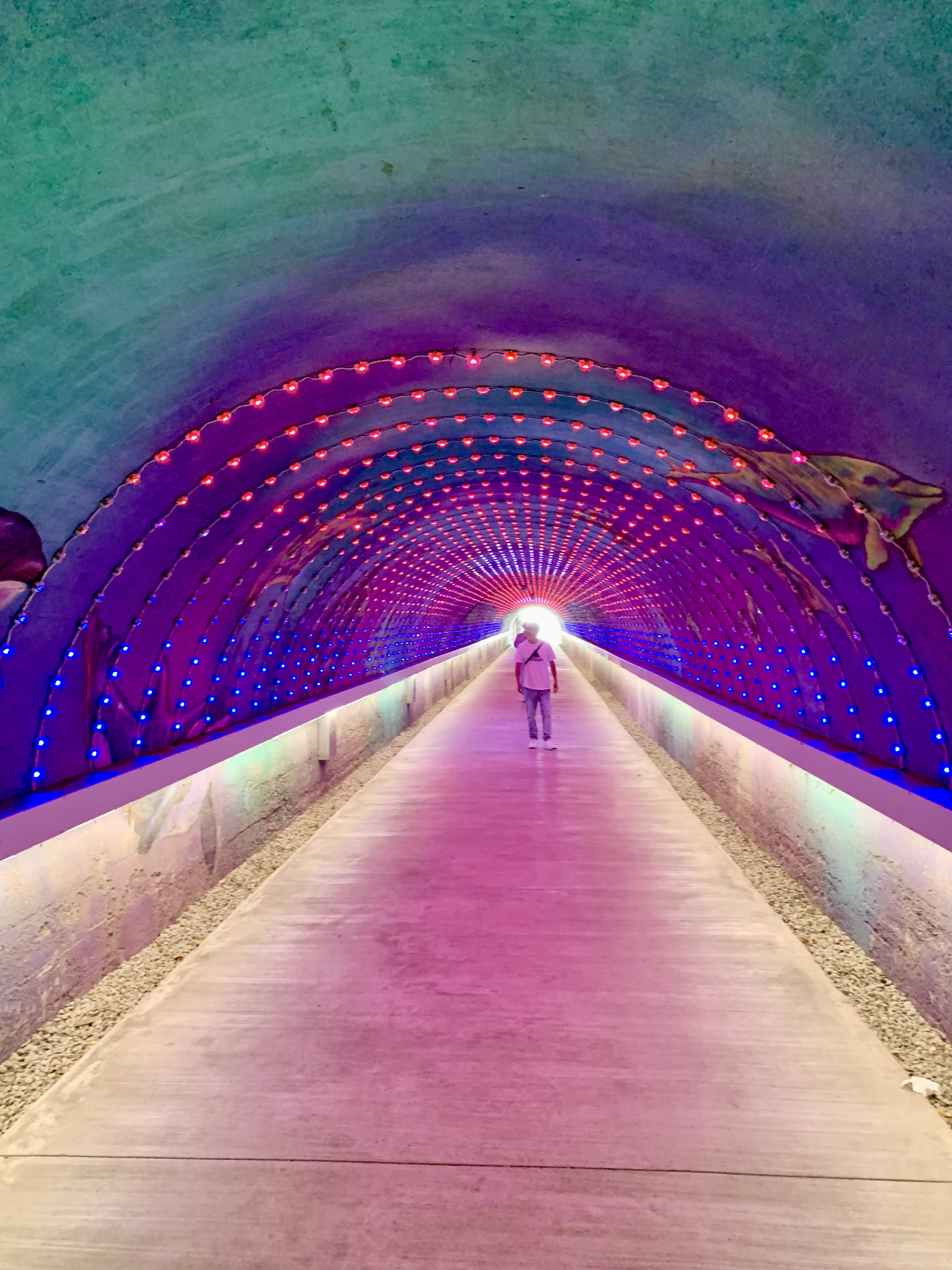


Left: On reaching the ridge there was an empty 'pill box' at the entrance to this sparkly lit tunnel ('tunnel of the stars' it is called) which took you under the ridge to the northern shoreline. I came to notice many such empty 'defensive fortifications' throughout Taiwan. I can't think why! The proximity of China may hold a clue?


After a long walk around the northern shore you come to the steep paths and steps which take you to the top of the cliffs. Quite a sweaty climb, but good exercise. At the western end is Cihou Fort. Right: The fort entrance. It was built by the Chinese in 1720, 'modernised' by the Quing Dynasty in 1824 and captured by the Japanese in 1895 (without much of a fight). Actually it is more of a large gun emplacement than a fort and housed, in the Jap days, 4 batteries of Armstrong 7" muzzle-loading guns (important info for my military readers). The fort never saw much action, even when held by the Japanese in WW2.

Left: Inside the fort. A fairly 'low-level' construction with accommodation along the lower deck.


Right: Looking in the other direction.


Left: .......and with good views over the surrounding land and sea which, I suppose, is a prerequisite for a fort with gun emplacements.


Left: While I was here there were scores of local schoolchildren visiting (the ones wearing orange). They seemed to be having a very jolly time with much singing, taking of group photos and climbing all over the fortifications (despite notices saying climbing forbidden). I didn't witness any casualties.


Left: At the eastern end is the lighthouse which overlooks the port/harbour entrance. It too had attracted many tourists. There is a decent café next door to it.....and more views over the port and city (PS. Kaohsiung is Taiwan's 3rd most populous city).


On descending from here I really did urgently need a cool, refreshing beer. As mentioned previously, Taiwan is not blessed with decent cafés and bars with outside seating. However, there was a very decent one (and only one) on the beachside; the Sunset Bar (right). I made a beeline for it and it also served some very good food. Much appreciated! I stayed here until after dark. If this was Thailand or Vietnam the beach would have had wall-to-wall 'places of refreshment' and other 'social facilities'.
The beach, and especially from up on the ridge, is famed for its dramatic sunset views. I must have missed them! 

Left: Leaving the beach on the way back to ferry and hotel.


At risk of making this a rather 'over-long' blog, I will continue with my next day's venture in Kaohsiung. I have time on my hands where I am at the moment!

Back to the Gushan port area. On a tall forested bluff on the other side of the water directly opposite the lighthouse is what was the British Consulate Residence. The British had established one of several Taiwan trading posts here.
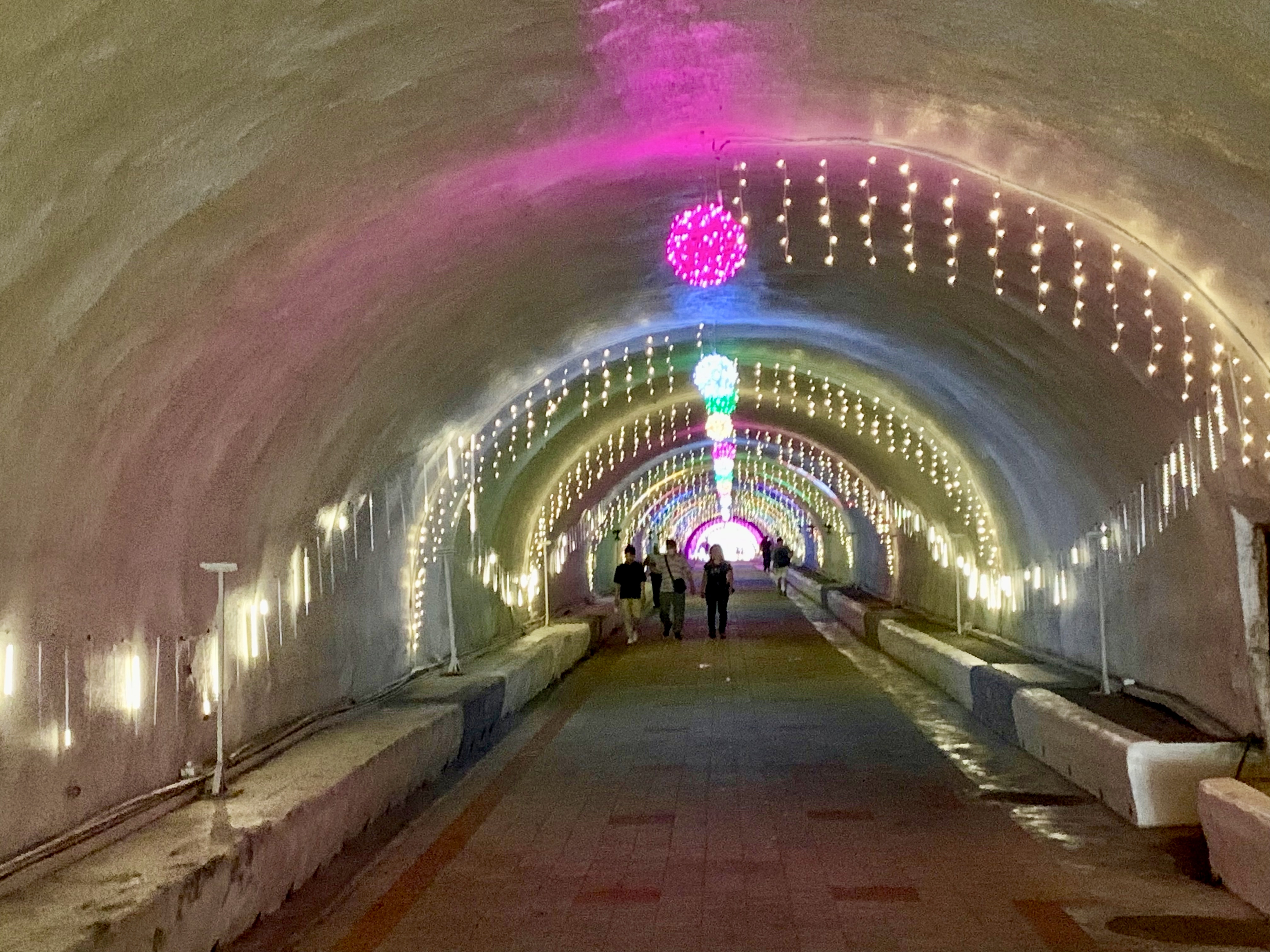
Right: Through another illuminated tunnel to the bottom of the steps, 127 of them, leading up to the Residence.


Left: The frontage of the Residence. Note the British style 'pillar box' (red post box). £2 entrance fee. It had great views over the city to the south and the port entrance.
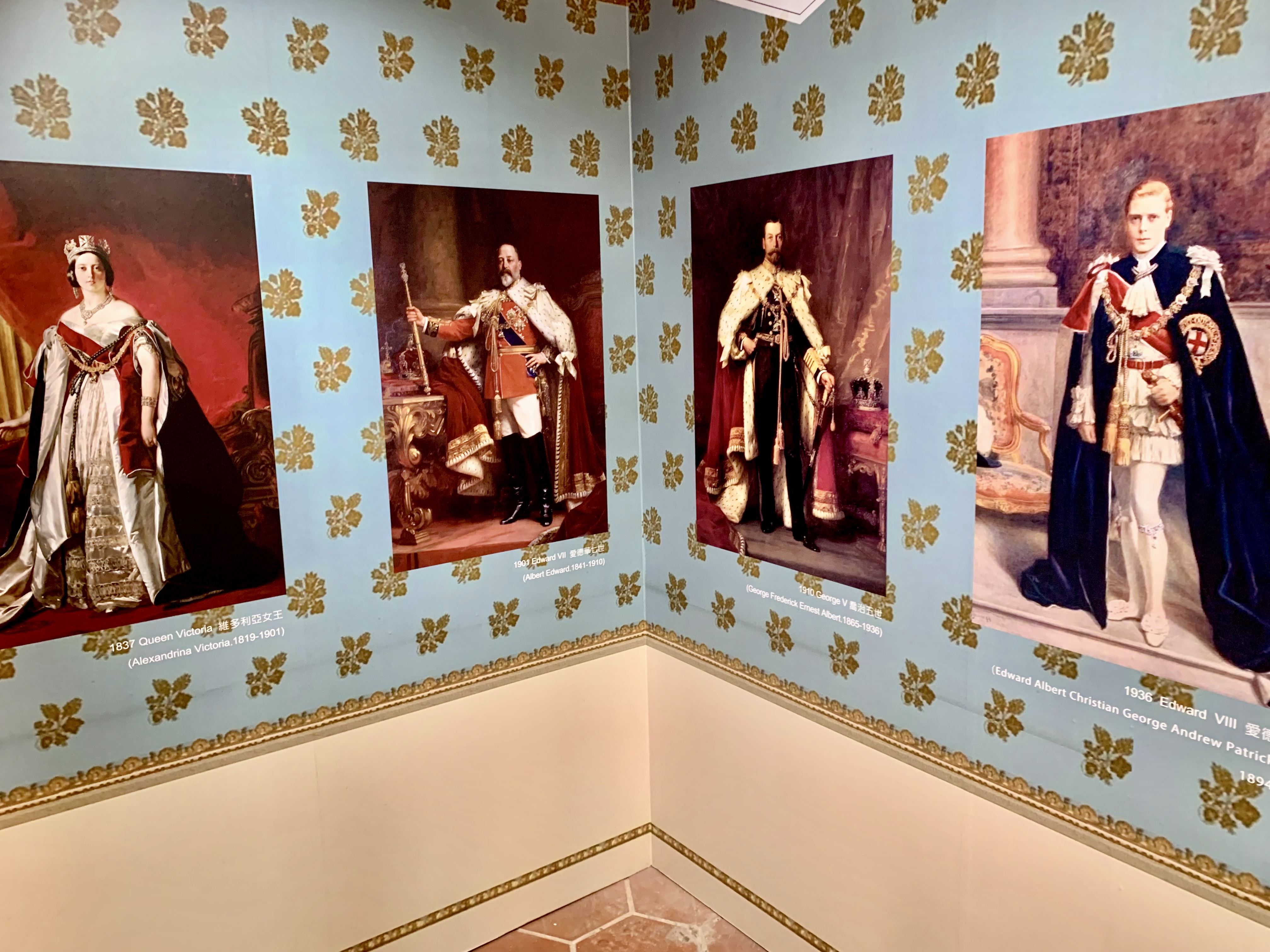


The building has been maintained in pristine condition. It contains a small museum which displays, amongst old English tea services, portraits of British monarchs from Queen Victoria onwards (right).


.........and left. I'm sure you don't need me to identify them. Unless you are not British that is. In which case you will probably not be interested!


For some reason they seemed obsessed by the 'English Tea' tradition. Tea was served, including large cake stands, in the inside 'tea rooms' (right). They were all booked up!


Left: Also on the outside balcony. All tables taken. I resorted to going to the courtyard café at the back and ordered a cup of 'Earl Grey' tea. It tasted sweet and sickly and absolutely nothing like Earl Grey tea. Hey Ho! It's the thought that counts.


Right: The view over port and city from the back of the Residence.


Left: The temple which adjoins the main building. I don't expect the British Consul spent much time in here. Who knows?


Right: On the shoreside below the Residence is what was the 19th century British Consulate itself. It too has been carefully maintained.


Left: Outside the front door is a series of very realistic dioramas depicting life in this area in the 19th century.


I post below a selection of these dioramas. You can add your own captions!


Right: Inside there is a replica of the meeting, in 1858, between the British Consul, John Gibson, and the Chinese representative, Xian De Zeng (nice hat!), to discuss the Treaty of Tianjin. This treaty was designed to legitimise trade (esp. opium) and the work of British 'missionaries' amongst other things. The locals were not happy with the proposals. The talks here were not going well.
Left: An 'adviser' was called in to smooth things over. The talks ended in acrimony and disaster.
Right: Talking of British missionaries, this diorama depicts a zealous missionary doctor, James Maxwell, in 1865. He did great work curing the locals of many ailments, including endemic eye diseases and malaria etc. Unfortunately he rather overstepped the mark and 'evangelised' his treatment as 'miracles of God' and rather pissed off both the Chinese local government and the British hierarchy as a result of his OTT 'God-squadding'. He was sacked and sent packing back to England.

Phew, that was a long one (as the 'ASTTB'!). It completes my tour of Kaohsiung. Onwards onwards!


Monday, 25 December 2023

FURTHER SOUTH TO KAOHSIUNG

 12th - 16th Dec 2023

85 Sky Tower in Kaohsiung

At the Xinyin train station I went to one of the ever helpful 'customer information' offices and asked for info on trains to Kaohsiung, which is on the west coast about 40 miles south of Tainan. The young man at the desk not only gave me advice (he spoke good English), but a gift of a pack of amusing playing cards. He took me to the ticket desk and then even escorted me down to the correct platform. What an amazing service! (or perhaps he was just making sure I disappeared). I was impressed. Can you imagine anyone in UK doing that for a foreign tourist?
The 'slow local' train took 1hr 45mins arriving in Kaohsiung at 1.05pm (on time of course). There is a good shopping centre at the station here including a series of cafés. I went for a cup of coffee and bite to eat and happened to meet a couple of fellow tourists. 

Left: Fellow tourists, Mark and Dorota from Wales. We had a good chat before we went our separate ways. I mentioned that I would include them in my 'blog', so have done so! I gave them the details so they might see it. I hope they had a good trip.


There is a good Metro system around this city. It was two stops south to my hotel, the Fine Hotel, located on the16th floor of a high-rise building and which was great value for money (all mod-cons including cooking facilities for £22 per night). 
The local Metro station was at a shopping mall (right), at Sanduo Shopping District. As with all else in this country the 'mall' was sparkling bright and clean and with very upmarket shops.

One shop caught my eye. It sold expensive skin and hair lotions. This 'mannequin' was advertising it. It doesn't say much for the product!


All the metro stations were gleaming as well, with very accurate and informative illuminated signs. This one (right) shows the cleaning lady busy about her business.


That evening, wandering around town, I came across this bar (Old Fart DJ Bar). Well how could I resist popping in for a drink! Most bars in Taiwan don't open until after 8.00pm.


I was the only customer. It was a great place, and the background music was old-fashioned Western songs....not played too loudly. The 'landlord', Tony, enjoyed singing along to them.


Right: Mine hosts, Tony and Eva. They were great company and both, especially Eva, spoke excellent English. She was very interesting on a load of subjects including much about Taiwan. It was quite educational. I took their photo and told them not to smile to conform to my 'grumpy old man' demeanour! I went there twice. On the second occasion a young German chap, Marcus, turned up with a group of 4 studenty types. They were competing in a showjumping competition  in town. Interesting chap Marcus. Ex-Dresden, he has lived in Taiwan for 5 years. He runs a stable of 60 horses and instructs showjumping and dressage. Only the very wealthy can afford to keep horses in Taiwan (cost of importing them) and they can't do cross-country due to the nature of the countryside (mountains, jungle or farmed arable).

Right: The 85 Sky Tower here is the 2nd tallest building in Taiwan (after the Taipei 101). It was completed in 1997 and is 1,140 ft high (with a 100ft antenna on top). It originally housed all sorts of venues such as an amusement park, smart hotels, shops, an exhibition centre etc. as well as offices. There is a viewing platform up top. The company that built it (Tuntex) went bust some years ago and as such the building has become virtually abandoned and much of it, inside, is now very dilapidated. You can go up (in a scruffy lift), which I did, to the 12th floor where there are some shops, offices and a hotel. The rest is closed off, so no going up to the observation platform. Boring, and what a waste of a most impressive building! BTW, it does not have a 44th floor. The locals suffer from 'tetraphobia'; a fear of the number 4. No, I haven't a clue either! (Just looked it up. Apparently the Chinese character for '4' resembles that of the character for 'death').  I might suggest to our useless British Government that it would be suitable accommodation for some of our illegal immigrants!

Left: Another impressive building nearby and close to the harbour called 'The Rythm of the Sea'. I went into it, and it seemed rather deserted. I believe it houses offices to do with shipping.

Then on to the impressive Exhibition and Conference Centre where I had a good beef noodle soup. Again.


Below: These articulated roadwork warning signs were much in evidence. Quite amusing, I thought.


Kaohsiung has an important and extensive harbour and port. Much more about that interesting area in the next edition. I am well behind with these blogs; far too much to see and do and I'm now not even in the country!

I'm writing this on Christmas Day, so you can see how far behind I am.......


Wednesday, 20 December 2023

HOT SPRINGS IN GUANZILING

 10th - 12th Dec 2023

Fire and water. Guanziling.

I took the train (local) from Tainan to Xinying, about 30 mins north-east, and then a bus a further 30 mins north-east to the town of Baihe. The 'info desk' at Tainan had given me the times, designations and numbers of the train and buses for my whole trip, including to Guanziling, a small town in the hills of what is known as Siraya National Scenic Area, which was the focus of my journey . They were all spot on and worked like clockwork. So efficient!

I had booked into a small hotel called, curiously, 'Third Great Uncle's House'! It was supposed to be in Baihe but was actually on a farm area about 2 miles north. On arrival at the bus station in Baihe I asked how to get there, showing them the details from my trusty notebook. They helpfully put me on a small mini-bus (gratis!) and it dropped me off in a group of houses near the hotel. With help from some locals I was directed to walk about half a mile further on up the road to find this middle-of-nowhere hotel. On arrival I was graciously welcomed and given a very comfortable room with all mod-cons. I then discovered, to my dismay, that I had lost my little pocket notebook. I can't think where. Shit! It held some important info. About ten minutes later a man working at the hotel called me and said that he had received a message from the bus station to say that they had found my notebook. Incredible! How had they known where to find me? This chap then drove me back to the bus station and I was duly handed my notebook. This helpful hotel driver, whose name I subsequently discovered is Akira, proved to be the most incredibly kind and generous person and drove me to Baihe, totally free of charge, even though I offered to pay, on any occasion. It is an example of how the Taiwanese appear to get great pleasure out of helping people, especially confused and ignorant tourists like me.

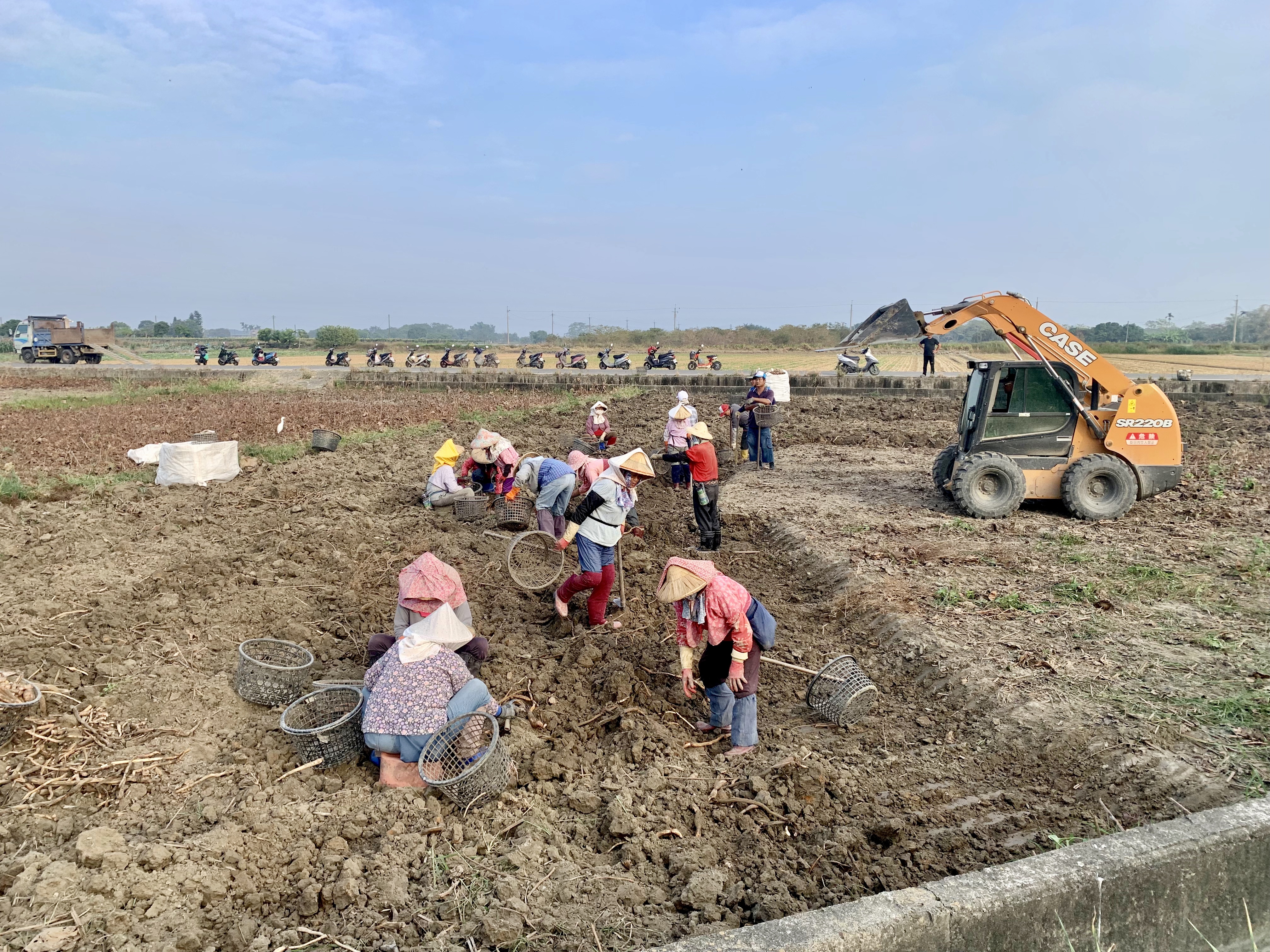
Akira offered to take me to show me an interest of his; namely the production of Lotus Root Powder. How could I refuse. After a very good Chinese breakfast (with good hot coffee) the following morning he took me, we went on bicyles, to a place, in the surrounding estate, where they made it. It involves much hard labour. Left: There were 18 ladies, and a digger driver, working in a field uprooting the lotus plant roots. They start work at 5.30am.

The lotus roots, long fat sausage-like things, are stripped, cleaned and mashed up in a small local factory. One of the workers here, I discovered, was from Hanoi, Vietnam. I spoke to him as I can speak a little Vietnamese, and he told me that they do have immigrant workers in Taiwan, and they work very hard!


Left: The machinery in the small rural factory looked very basic and I'm sure would have failed every conceivable UK 'Elf 'n Safety' regulation. I was told they produced 20,000kg of the ground powder every day.


Right: The raw powder is taken to a large yard where it is scraped from containers and spread out on trays to be dried. I was given the job of doing a bit of minor scraping.


The finished product is packaged and supplied to pharmacies and supermarkets. What does it do?, I hear you ask. Well, Akira told me that taken (diluted) regularly it ensures you live forever free from any known ailment. A good sales pitch! I was persuaded to eat a couple of mouthfuls. It didn't taste of anything much. Left: Feeling stronger already!


Being so far out in the fields, I was lent a bicycle (right). They had several for use by the guests. It had a very good bell. I used it on a couple of occasions; firstly to follow Akira around the Lotus fields and factory and on another occasion to pedal the 2 miles into Baihe, where I got completely lost.


Early the following day I was given a lift by the trusty Akira into town to catch the Yellow 13 bus up into the hills to the east, to the small town of Guanziling.

Left: Some of the hills. It was rather a hazy day. There were some serious hairpin bends on the way up.


The volcanic area around Guanziling (Taiwan is a volcanic country known for the occasional earthquake) has many hot springs. The town is in two parts, the 'upper', and about 400ft below on a river, the 'lower' bit. There is an excellent Tourist Information Centre which gave me some useful maps and directions. Right: A little man and his dog outside the Information Centre, built out of old scrap metal.


I had to take a taxi (my bête noire normally) to the place I was interested in seeing. It was about 5 miles further uphill out of town. As it happened the taxi driver was charming and we negotiated a price of NT$200 (£5) for the round trip and he would wait for me at the site. Left: This little cavern, ot 'grotto' as it was labelled, was rather smaller than I had been led to believe (the adverts described it as a cave), but interesting all the same. It constantly emitted water and fire. They say fire and water don't mix, but they did here. I hope it wasn't just a hoax, played for the tourists, and they turn off the calor gas cylinders when the visitors have all left! I am the eternal cynic. There were also several good viewing points over the mountains, but it was a very hazy so no good photos, plus a decent café. 

Back down to town and I enjoyed an excellent cup of coffee at the Information Centre, meticulously prepared by this pretty lady.


Then a spot of lunch at a decent restaurant which had an interesting menu (left). It included Sesame Oil Bird Testicles and Garlic Hornet Pupae (if you click on to the pic you may be able to read it, 6th and 7th down). I might suggest these items to my local eatery at home. I chose the Wild Snails, and a bottle of local lager.


Right: The snails were, actually, surprisingly good. We appear somewhat behind the times in UK for more 'interesting' dishes. I'm sure the wobbly obese Brits would benefit from this diet. Could they be persuaded to go for a 'Big Mac Bird Testicles and Fries'? 


After lunch I decided to go for a bit of excercise by following the 'round the town' walking tour. Left: The map (click on to enlarge). I set off from the Information Centre (top centre of map) in a clockwise direction. It started by taking you a few hundred feet down, through the trees to the river, on a stone stairway. The steps of this stairway were tiny, only about 6" high, and it was quite difficult to avoid tripping up.

Right: On reaching the bottom there was an outlet from a hot spring. There are several of these and some of the hot water is piped off to fill pools in which people could 'bathe', and for heating systems. 'Hot springing' is de rigeur here, I was told (not by me). The water as it emerges is at about 85ºc and is a light grey colour, not mud, but due to a heavy content of alkaline minerals. It is supposedly very 'therapeutic'. 

Left: The waterways around the lower town all have the same grey colouration. There were establisments advertising 'therapeutic hot-spring bathing'. I resisted the temptation.


There is a well marked wooden planked pathway to follow. Along part of which were these characters (right). I also passed a shopfront which advertised a 'One Stop Buddhist Funeral Service. Also Caters for Taoists. Open 24hrs'. It has a website!


Left: The start of the way back up. Up the tower and across the gangway......


Right: .......to a very steep stone stairway known as 'Hero Slope'. This was built by the Japanese and was used as an excercise facility for recuperating Jap soldiers. There are 249 large steps. Anyone reaching the top was declared a 'hero'. It nearly killed me. This takes you back to behind the Information Centre.

The 'walk' took me about an hour and I was sweating a bit!

After that is was bus back to Baihe where, on arrival, I asked the chap at the desk to call Akira (he told me to do this) and 15 minutes later he arrived to take me back to the hotel. What a star!


Left: The redoubtable Akira and the charming lady who seemed to run the hotel. They were delightful hosts and, thanks to them and the excellent hotel facilities, I had a most enjoyable two night stay. Thoroughly recommended!

The next day it was back again into Baihe, bus to the railway station at Xinying and then onwards further south to my next port of call........


PS. I have done some research on the subject of 7-Eleven and Family Mart shops, which I commented on previously as being more than abundant in Taiwanese cities, especially Taipei (sometimes two on one street). They are fantastic small shops, especially the 7-Eleven ones. They not only serve a great variety of drink, food, electrics, pharmacuticals etc., but act as mini-travel agents, places to get travel cards, ATMs, and several other local financial services, plus loos, and are open 24hrs a day! 
7-Eleven is an American (Texas) based organisation. Family Marts is based in Japan. In 2021 there were 78,029 7-Elevens and 24,941 Family Marts worldwide. 
Taiwan has, in 2023, no less than 4,164 Family Marts and a staggering 6,712 7-Elevens. Incredible! I bet you are interested.